
Better Aging
Overview of the various better ageing treatments
“Anti-aging” and “longevity” are terms that are currently appearing in all newspapers, magazines, and tabloids.
One focus of our practice is this anti-aging, or rather "Better aging" therapy.
We live in a generation in which we have the opportunity and good fortune to live to a very old age. However, this is only desirable if we can maintain our quality of life as we grow older. This primarily means staying healthy, and modern medicine has made immense progress in treating degenerative diseases and detecting serious conditions at an early stage, often enabling them to be eliminated.
Regular preventive medical checkups are highly recommended, along with a sensible, structured lifestyle. But we also want to feel good and enjoy our lives, our families, our relationships, and our free time. Especially in today's world, where so much importance is placed on appearances, we want to look good and fresh and radiate youthfulness, dynamism, and vitality.
There is no question that our aging process theoretically begins at birth; signs of wear and tear start to appear in early adulthood, but it is especially from around the age of 30 that many people begin to notice degenerative changes and signs of aging. It is important to counteract these early on and wisely.
We offer a very wide range of measures here, which we tailor to your individual needs. We would like to create an anti-ageing concept for you, as part of which we will accompany you in the long term with the aim of maintaining your quality of life, dynamism and resilience.
In this video, Dr. Peter Dietz provides an overview of longevity treatments and modern preventive medicine. You will learn how risks can be identified early on and therapies tailored specifically to your situation.

We cover the following facets of better ageing:
In detailed, open anamnesis discussions, we analyze your life situation, dietary habits, daily routines and your problems and stresses. Identifying imbalances and problem areas allows us to analyze how situations and routines can be changed and adapted to avoid pressure and disease-promoting stress. We help you to develop a new, complex lifestyle concept with which you can better master your everyday life, recognize and avoid health risks and find your way to a satisfying, balanced daily routine in these fast-paced, demanding times. - see also www.medandcare.ch
An extremely important part of a healthy, fulfilling life is the sensible use of preventive medical check-ups. The main goal must be that we "grow old in good health". There is no question that every person will inevitably suffer some kind of illness. However, regular and coordinated preventive healthcare allows pathological changes to be detected at an early stage and in many cases risks to be eliminated or incipient developments to be stopped in the wrong direction, thus ultimately preventing malignant developments. This includes cancer screening smears for women, ultrasound examinations of the breast and abdomen, liver, kidneys, thyroid and blood vessels; for men, prostate examinations, CT or MRI examinations in the event of corresponding symptoms; for both sexes, from a certain age, a heart examination with ultrasound, stress ECG, regular colonoscopies from the age of 50 and also regular basic laboratory tests to monitor organ functions and to be able to recognize and counteract incipient deviations.
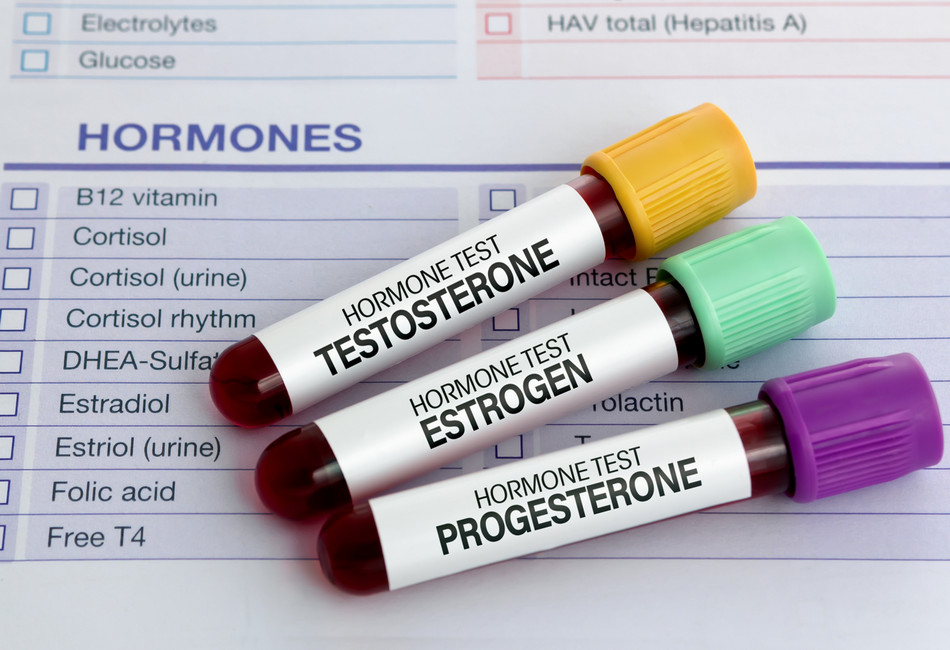
Our organism is controlled in many different ways, on the one hand by nerve impulses and on the other by hormones, which have an essential function in the body for maintaining metabolic functions and almost all organic processes. Our body is such a complex structure that every cogwheel has to mesh so that the human body can function in a good balance.
When hormone function declines, discomfort, imbalances, and other disorders can arise. In this respect, monitoring hormone function is sensible and important. This is particularly true during pre- and perimenopause (menopause) in women and andropause in men. Although the decline in hormone function occurs much more rapidly in women and is therefore perceived more negatively by them, men are also affected by declining hormone function as they age. As mentioned above, our generation has the opportunity to live to a ripe old age—and no one wants to spend the rest of their life after menopause in a state of “hormonal chemical castration” for another 40-50 years.
Unfortunately, with the loss of the body's own hormone production, more pronounced degenerative processes and signs of fatigue set in, both mentally and physically, which can gradually rob us of our quality of life. Of course we get older and change continuously as we get older: and of course this ageing process cannot be stopped or reversed. But it can be slowed down - and this is where hormones play a crucial role. Not only do we reduce the risk of osteoporosis and the risk of developing bowel cancer and Alzheimer's by taking hormones from the menopause onwards, we also get better sleep, better skin and hair, better mental balance and resilience, better libido and slow down degenerative signs of wear and tear.
A healthy, balanced diet basically provides us with all the substances, proteins, vitamins and trace elements that our body needs to function properly. Nowadays, however, our diet is not always as balanced and sensible as it should be, and the often highly processed foods no longer contain old ingredients, as was and should be the case in the past.
Genetically caused reduced absorption in the intestine, which does not allow sufficient absorption of some substances, can also lead to deficits in the metabolism, which it makes sense to compensate for. Here, too, science is constantly gaining new insights, which we implement in our individual therapy concept. For example, we offer mixtures of vitamins and trace elements in capsule form to compensate for these potential deficiencies. Supplementing the diet with these substances makes sense in order to provide the body with all the basic substances it needs for its enzymes, metabolism and the proper functioning of the organs.
There are countless dietary supplements offered by the industry - often it is never really possible to prove what is really contained in these capsules or tablets; in this respect, you can also spend a lot of money for less effective measures. We offer products that are manufactured by pharmacies and are therefore certified and regularly monitored, which actually contain the substances in the dosage stated - and which are a sensible addition to a sensible mixed diet. See also www.medandcare.ch
An even more efficient form of administration is to deliver these essential amino acids, vitamins, and trace elements to the body via infusion. This bypasses any absorption problems that may exist in the intestine and ensures that the desired substances reach the bloodstream and are transported by the blood circulation to where the body can store them and use them when needed for organ function, enzyme activity, the immune system, and brain function.
In a preliminary discussion, we analyze where possible deficits exist and design an individual concept for each patient with different compositions of the infusion concentrates in order to specifically compensate for the existing deficits. Often 1-2 infusions in spring and fall are sufficient to ensure excellent stability of the organism throughout the year. see also under www.medandcare.ch
We have already touched on the complex function of hormones in the section above. Hormones also play an essential role for the skin, one of our largest organ systems. As we age and hormone function declines, the skin becomes thinner and more fragile, the regenerative capacity of the cells decreases, the elastic potential of collagen and fibrinogen diminishes, and skin regeneration and the formation of new elastic fibers gradually decline. This also affects the water-binding capacity, metabolic activity, and resilience of our skin. This leads to more frequent dryness, irritation, pigmentation disorders, hypersensitivity, etc.
Local (topical) application of hormones can also achieve an outstanding effect that far exceeds the use of cosmetic creams. (This does not mean that good cosmetic care should continue to be practiced). However, if you want to apply a medically sound and truly profound therapy that affects the basal layers of the skin, there is no way around targeted and individually designed hormone therapy in the form of creams, serums or (for the scalp) tinctures.
We often hear very critical voices about cosmetic surgery under the motto: "You have to be able to grow old with dignity". This may undoubtedly be true, but do you also have to look old? It is a legitimate need of every human being to please. - Not only to please yourself, but also to please others - especially your loved ones, of course. But even in social life, there is no question that someone who looks attractive and aesthetically pleasing is more likely to receive social acceptance and attention and is often more successful at work.
Now, beauty should undoubtedly not be the only thing that makes us happy in life—and if it is our sole goal in life, it becomes very mundane. But there is a little bit of narcissism in all of us, and so aesthetic medicine and cosmetic surgery are also a domain that has its place in the field of anti-aging medicine. The previous chapters provide detailed information about the possibilities offered by modern medicine, and we can also offer countless reputable medical treatment options with a high level of expertise and aesthetic sensibility.
Don't be afraid to venture into this part of medicine; even such small measures - or even more extensive interventions - help to strengthen your own body awareness and self-confidence, achieve more satisfaction with yourself and ultimately a different appearance, better social communication and satisfaction. Classic anti-ageing measures include, for example Botox which is used prophylactically to prevent the deeper burying of expression lines, or hyaluronic acid preparations, which are used to compensate for the loss of skin volume in certain areas of the face, or the biostimulantswhich maintain the skin's elasticity, structure and ability to retain water. - Or, finally, cosmetic surgery, which does not eliminate the signs of ageing, but can reverse them a little in order to come a little closer to our ideal image of a fresh, dynamic, lively and expressive appearance into old age.