
Longevity Zurich – Aging Healthily with Medical Support
At his practice in Zurich, Dr. Peter Dietz combines preventive care, personalized diagnostics, and targeted interventions into a personalized longevity plan aimed at maintaining health, performance, and quality of life over the long term.
Personalized Retirement Planning for a Better Quality of Life in Old Age
As we age, our physical condition, metabolism, and personal needs change. For Dr. Peter Dietz, therefore, the focus is not on trying to halt the natural aging process. Rather, the key is to closely monitor these changes and take targeted action where medically sound options are available.
To this end, he considers not only individual symptoms or lab results, but the patient’s personal circumstances as a whole. Preventive screenings, lifestyle habits, diet, hormonal changes, and other individual factors can all play a role. The decision about which measures are actually appropriate is not based on a fixed formula, but rather on the patient’s individual circumstances.
For Dr. Peter Dietz, well-being, vitality, and a positive body image are also key to a fulfilling life as one ages. His approach therefore combines medical prevention with the goal of feeling as good as possible—both physically and personally—even in later stages of life.
Would you like to learn more about the term “longevity” and its medical significance? In our guide, “What Is Longevity?”, we explain the basics and how it differs from anti-aging, better aging, and healthy aging.
Personalized support instead of a standardized longevity center program
If you want to keep track of your health over the long term, you shouldn’t have to start from scratch at every appointment. That’s why Dr. Peter Dietz, M.D., emphasizes continuous medical care, in which test results, health trends, and previous treatments can be reviewed together over time.
Many tests can be performed right in the office. If further evaluation outside his area of expertise is warranted, Dr. Peter Dietz refers patients to specialized colleagues as needed. This ensures that even unrelated medical issues remain connected—with a single point of contact who maintains an overview of the patient’s care.
In this video, Dr. Peter Dietz provides an overview of longevity treatments and modern preventive medicine. You will learn how risks can be identified early on and therapies tailored specifically to your situation.


Key Areas of Longevity Support in Zurich
The reasons for taking a more active interest in one’s own health vary widely. Some people want to take preventive measures early on, while others notice changes in their energy levels, sleep, stress tolerance, or physical well-being. Accordingly, different medical areas may take center stage in longevity treatment.
Lifestyle and Daily Life
During an in-depth conversation, we can take a closer look at diet, exercise, sleep, stress levels, and daily habits. The goal is to identify unhealthy patterns and develop changes that can realistically be incorporated into your daily life.
Prevention and Diagnosis
Regular preventive care can help detect changes in health at an early stage. The appropriate tests depend on your age, medical history, and personal risk factors. Some diagnostic tests can be performed directly at the doctor’s office, while additional tests are coordinated with specialized physicians as needed.
Hormonal changes
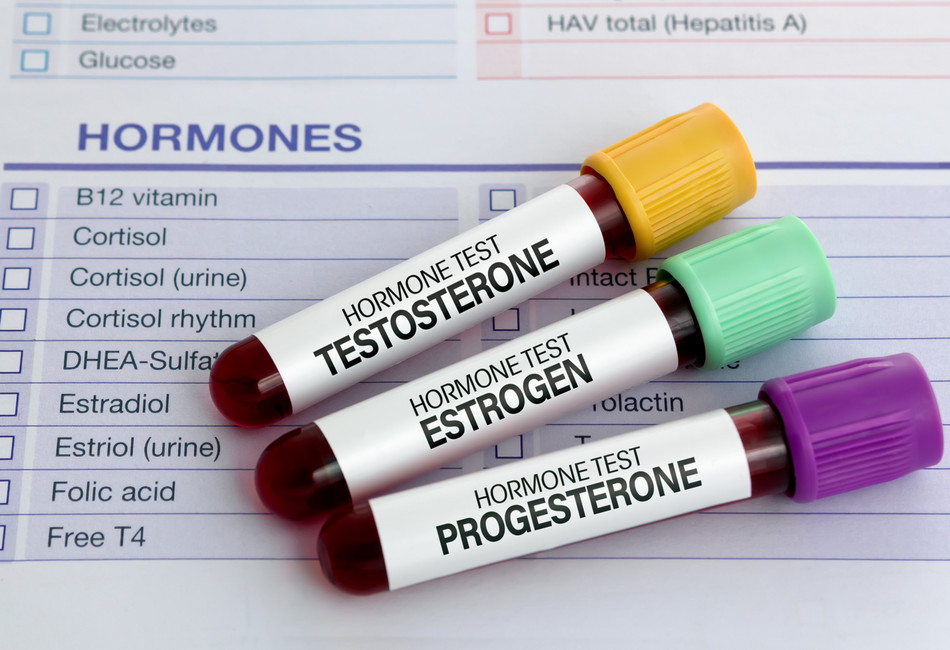
Hormonal changes can play a role, particularly around the time of menopause in women and, as men age, in men as well. If such changes are suspected or if symptoms are present, hormone levels can be specifically tested, and possible treatment options can be discussed. Depending on the test results, treatment with bioidentical hormones may also be an option.
Vitamins, Trace Minerals, and IV Infusions
If there is a proven or medically justified need, vitamins, trace elements, or amino acids may also be part of the treatment plan. Dr. Peter Dietz offers both oral supplements and individually tailored infusions for this purpose.
Skin, Radiance, and Aesthetic Medicine
For many people, aging is not just about physical health, but also about their appearance. Depending on their preferences, medical skin treatments or medical facial procedures can therefore be incorporated as complementary options.
Frequently Asked Questions About Longevity Support in Zurich
Here you’ll find answers to frequently asked questions about medical longevity support at Medicine & Beauty—from how it differs from a traditional longevity center to the selection of appropriate tests and treatments.
What sets Medicine & Beauty apart from a traditional longevity center in Zurich?
Medicine & Beauty is not a standalone longevity center, but rather a medical practice offering personalized care from Dr. Peter Dietz, M.D. Instead of a set program, examinations and potential treatments are selected on an individual basis. If necessary, further diagnostic testing outside the practice’s area of expertise can be coordinated through specialized colleagues.
Who is longevity coaching suitable for?
Longevity support may be of interest to people who want to monitor their health over the long term, detect age-related changes early on, or have existing symptoms medically evaluated. The areas of focus that make sense depend on a person’s individual health situation, age, and risk factors.
What types of examinations are available at Medicine & Beauty?
Depending on your individual circumstances, various preventive care and laboratory tests can be performed right here in the office. These include, among other things, tests to measure certain blood and hormone levels. For further diagnostic evaluations, Dr. Peter Dietz collaborates with specialized physicians as needed.
Does Longevity make sense even if you don't currently have any symptoms?
Yes, longevity is not focused exclusively on existing health issues. Prevention is a key component: Individual risk factors and changes in health can sometimes be identified before they manifest as noticeable symptoms. The decision regarding which tests are appropriate should be made on a case-by-case basis and based on medical grounds.
Longevity Zurich – Get Personalized Advice

Longevity Zurich: The Medical Components of Our Approach
Through detailed consultations, we analyze your life circumstances, dietary habits, daily routines, and the challenges and stresses you face. Identifying imbalances and problem areas allows for a thoughtful analysis of how situations and routines can be changed and adapted to avoid pressure and stress that can lead to illness. We help you develop a new, comprehensive lifestyle plan that enables you to better manage your daily life, identify and avoid health risks, and find your way to a satisfying, balanced daily routine in these fast-paced, demanding times. See also www.medandcare.ch
A crucial component of a healthy, fulfilling life is the sensible use of preventive medical screenings. The main goal must be to “age healthily.” There is no question that every person will inevitably face some form of illness at some point. However, regular and coordinated preventive care allows for the early detection of pathological changes and, in many cases, the early identification of risks, enabling appropriate further measures to be taken in a timely manner based on the findings. This includes cancer screening Pap smears for women, ultrasound examinations of the breasts, abdomen, liver, kidneys, thyroid, and blood vessels; for men, prostate examinations, and CT or MRI scans if symptoms are present; for both sexes, starting at a certain age, a cardiac ultrasound and stress ECG, as well as regular colonoscopies beginning at age 50 and routine laboratory tests to monitor organ function, detect early abnormalities, and take corrective action.
Our organism is controlled in many different ways, on the one hand by nerve impulses and on the other by hormones, which have an essential function in the body for maintaining metabolic functions and almost all organic processes. Our body is such a complex structure that every cogwheel has to mesh so that the human body can function in a good balance.
When hormonal function declines, it can lead to abnormal sensations, imbalances, and other health conditions. For this reason, monitoring hormonal function is both sensible and important. This is especially true during premenopause and perimenopause (menopause) in women and andropause in men. Although the decline in hormonal function occurs much more rapidly in women and is therefore perceived more negatively by them, men are also affected by declining hormonal function as they age. As mentioned above, our generation has the opportunity to live to a ripe old age—and no one wants to spend the remaining 40 to 50 years of their life after menopause in a state of “hormonal castration.”
Unfortunately, as the body’s own hormone production declines, more pronounced degenerative processes and signs of fatigue set in—both mentally and physically—which can gradually erode our quality of life. Of course, we grow older and continue to change as we age—and naturally, this aging process cannot be stopped or reversed. However, hormonal changes can have a significant impact on our well-being and various bodily functions.
When medically indicated, personalized hormone therapy can, among other things, support bone metabolism and have a positive effect on hormone-related symptoms. Depending on the individual’s specific situation, this may lead to improvements in, for example, sleep, skin and hair, mental resilience, or libido.
A healthy, balanced diet essentially provides us with all the nutrients, proteins, vitamins, and trace elements our bodies need to function properly. However, these days we don’t always eat as balanced and sensible a diet as we should; furthermore, our individual intake of certain nutrients can vary depending on our diet and personal circumstances.
Metabolic deficiencies can also arise from genetically determined reduced intestinal absorption, which prevents the adequate uptake of certain substances—deficiencies that it certainly makes sense to address. Here, too, science is continually yielding new insights that we incorporate into our individualized treatment plans. For this reason, we offer blends of vitamins and trace minerals in capsule form designed to address these potential deficiencies. Targeted supplementation can be beneficial in cases of a proven or medically justified need, in order to provide the body with all the essential nutrients it requires for its enzymatic processes, metabolism, and proper organ function.
The industry offers countless dietary supplements—often, it’s impossible to truly verify what these capsules or tablets actually contain; as a result, you can end up spending a lot of money on measures that aren’t very effective. We offer products manufactured by pharmacies—and thus certified and regularly monitored—that actually contain the substances in the dosages specified and that serve as a sensible supplement to a well-balanced diet. See also www.medandcare.ch
Another option is to administer selected amino acids, vitamins, and trace elements via infusion. In this way, the substances enter the bloodstream directly, bypassing absorption through the gastrointestinal tract. This can be particularly beneficial when certain substances can only be absorbed to a limited extent through the intestines or when there is a medically justified need.
An initial personal consultation and appropriate tests are used to determine whether any relevant deficiencies exist. Based on these findings, Dr. Peter Dietz develops a personalized infusion plan. The composition and frequency of the infusions are tailored to the individual's specific findings and needs.
The aim is to specifically replenish missing or insufficient nutrients and thereby support vital metabolic and bodily functions. The frequency of infusions and the specific ingredients used are determined on an individual basis.
See also www.medandcare.ch
We have already touched upon the complex function of hormones in the preceding section. Hormones also play an essential role in the skin, one of our largest organ systems. As we age and hormonal function declines, the skin becomes thinner and more fragile; cellular regenerative capacity diminishes, the elasticity of collagen and fibrinogen decreases, and skin regeneration and the formation of new elastic fibers gradually decline. Consequently, the skin’s water-binding capacity, metabolic activity, and resilience also decrease, leading to a higher incidence of dryness, irritation, pigmentation disorders, hypersensitivity, and the like.
A positive effect—potentially surpassing that of cosmetic creams—can also be achieved through the local (topical) application of hormones. (This does not mean, however, that one should forgo a good cosmetic skincare routine.) Yet, for those seeking a medically sound, truly profound therapy that acts upon the skin's basal layers, a targeted, personalized hormone therapy—administered via creams, serums, or (for the scalp) tinctures—may be considered.
The hormone treatments available from us are based on the latest scientific insights and research findings; they can help maintain a fresh appearance, a radiant complexion, and resilient, elastic skin—not only on the face, neck, and décolleté but also on the body.
One frequently hears critical voices regarding cosmetic surgery, often citing the sentiment that "one should be able to age with dignity." While this is undoubtedly true, does aging with dignity necessarily mean looking old? Many people have a legitimate desire to please—not only themselves but also others, and naturally, those closest to them. In social life, too, one’s appearance can influence both how we perceive ourselves and how we are perceived by others.
Of course, beauty should not be the sole source of happiness in our lives—and if it becomes the only goal, life can become quite banal. Yet, there is a touch of narcissism in all of us; consequently, aesthetic medicine and cosmetic surgery have a valid place within the field of longevity. While previous chapters have detailed the possibilities offered by modern medicine, here, too, we can provide a range of reputable medical treatment options, backed by a high level of professional expertise and an aesthetic sensibility.
Do not hesitate to explore this field of medicine. Even minor procedures or more extensive interventions can help you feel more comfortable in your own body and bring your appearance into greater harmony with your personal sense of self.
Classic longevity measures include, for example, Botox treatments—which can help minimize the depth of expression lines—and hyaluronic acid products used to restore lost volume in specific areas of the face. Biostimulants can also be employed to support skin structure, elasticity, and moisture-retention capacity. In addition, there are cosmetic surgical procedures designed to correct specific visible signs of aging, with the aim of achieving a fresh, dynamic, vibrant, and expressive appearance, even in later years.