
The effects of Botox are not permanent—but many patients wonder before undergoing treatment: How long does Botox actually last? The duration can vary significantly depending on the individual, the treatment area, and muscle activity.
While some people want a touch-up after just a few months, others report that the effects last longer. The key factor here is not only the amount used, but also how much the treated muscles are used in daily life.
Below, you’ll learn how long Botox lasts on average, when the effects begin, and what factors influence its duration.
How long does Botox last?
The effects of Botox typically last between three and six months. The duration may vary depending on the treatment area, muscle activity, and individual metabolism.
When does Botox start to work?
The first results are usually visible after a few days. The final results are typically evident after one to two weeks.
How often does Botox need to be repeated?
To maintain consistent results, Botox is typically re-administered two to three times a year. The exact frequency depends on how the treatment works for each individual.
Table of Contents
How long does Botox last, on average?
Botox typically lasts for about three to six months. During this time, muscle activity in the treated area is reduced, causing wrinkles to smooth out or become less pronounced.
After treatment, the active ingredient begins to break down gradually. The muscles regain their original activity, which means that wrinkles may slowly reappear. This process occurs gradually, not abruptly.
However, how long Botox lasts can vary from person to person. While some patients may want a touch-up after just three to four months, the effects remain visible for much longer in others.
For more information about the treatment and your individual options, please visit our page on Botox treatments in Zurich.
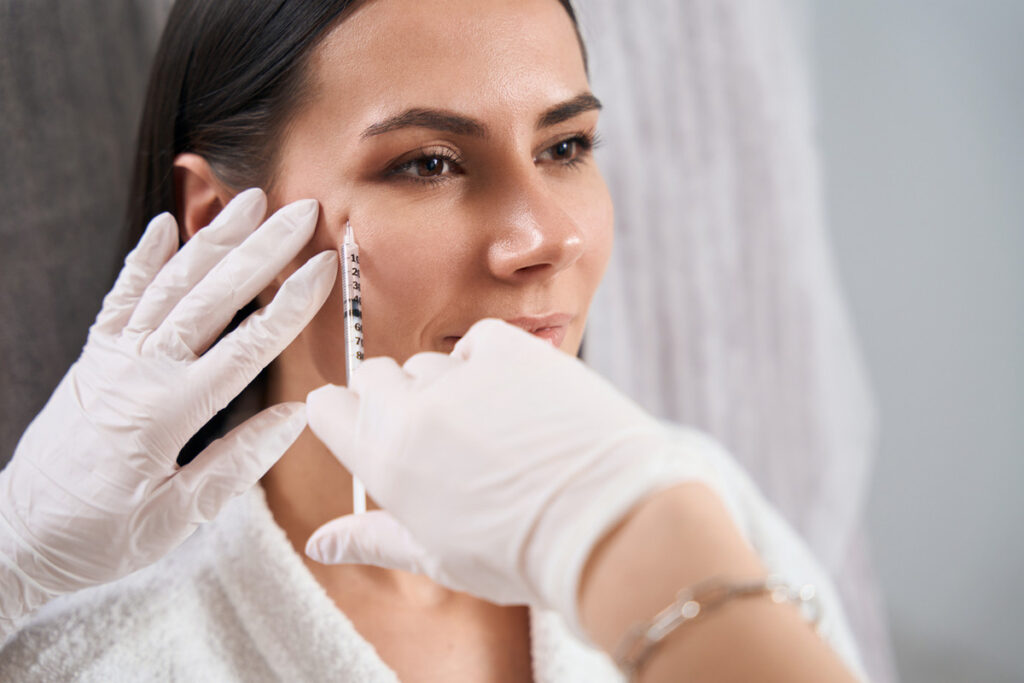
How does the effect of Botox develop in the first few days?
After a Botox treatment, the effects do not take effect immediately but develop gradually over several days. After the injection, the active ingredient begins to reduce signal transmission between the nerves and muscles.
In the first few days, muscle activity changes only slightly at first. After about three to five days, the first visible effects become apparent—the treated areas appear more relaxed, and wrinkles begin to smooth out.
The full results usually become apparent after one to two weeks. Only then is the effect fully developed and can be realistically assessed.
How quickly this process occurs depends, among other things, on individual muscle activity and metabolism.
Why doesn't Botox last the same amount of time for everyone?
The duration of Botox's effects can vary significantly from person to person. While the effects wear off after just a few months in some patients, they last longer in others.
A key factor is individual muscle activity. Areas with more pronounced facial expressions—such as the forehead or the glabellar lines—are used more frequently in everyday life, which can cause the effects to wear off more quickly.
Metabolism also plays an important role. People with a faster metabolism generally break down the active ingredient more quickly, which can shorten its shelf life.
In addition, the amount of active ingredient used and the precise placement of the injections influence the outcome. A personalized treatment plan helps ensure the most even and long-lasting results possible.
How often should you get Botox touch-ups?
Since the effects of Botox wear off over time, regular touch-ups are necessary to maintain consistent results. However, the exact timing varies from person to person and depends on how quickly muscle activity returns.
Many patients decide to undergo another treatment as soon as the effects visibly begin to fade and the first signs of movement or wrinkles reappear. This decision is based less on fixed time intervals and more on their personal impression when looking in the mirror.
It is also interesting to note that, with repeated treatments, the muscles can “adapt” over time. In some cases, this can lead to the effects lasting longer or requiring less of the active ingredient.
Another important factor is individual tailoring. Depending on the treatment goal and area—whether it’s traditional wrinkle treatment, Baby Botox, masseter Botox, or other facial treatments—the dosage and application vary significantly.
Careful planning is key to achieving a result that is both long-lasting and natural-looking.
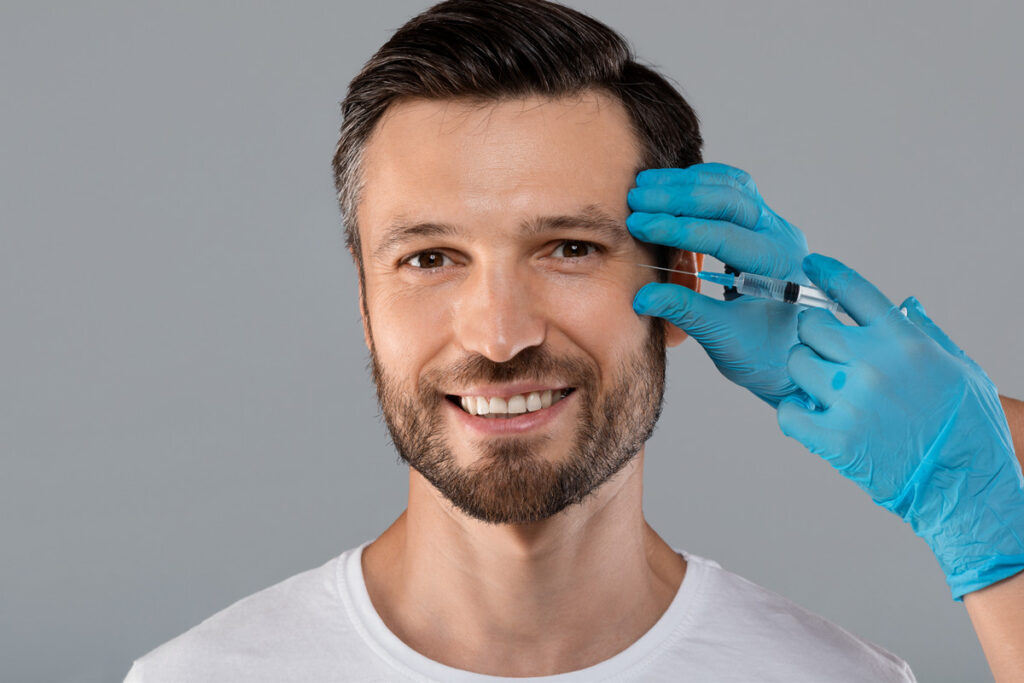
Does Botox last the same amount of time for men and women?
The duration of Botox results can vary between men and women. In many cases, Botox lasts slightly shorter in men, which is primarily due to their stronger musculature.
Men often have stronger facial muscles, particularly in the forehead and jaw areas. Especially in the masseter muscle—which is relevant for Botox treatments—increased muscle activity can cause the effects to wear off more quickly.
For this reason, men often need a slightly higher dose to achieve a comparable result. However, the duration of action is not necessarily shorter; rather, it is primarily determined by muscle activity and the individual dosage chosen.
In any case, it is essential to tailor the treatment to the patient’s specific anatomy in order to achieve both a sufficiently long-lasting effect and a natural-looking result.
Conclusion: How long does Botox realistically last?
In most cases, the effects of Botox last between three and six months. How long the results last in each individual case depends primarily on muscle activity, the treatment area, and the dosage selected for that person.
While the initial effects become apparent after just a few days, the full results take one to two weeks to develop. Over time, the body gradually breaks down the active ingredient, allowing muscle movement to slowly return.
Regular touch-ups can help ensure consistent results and maintain the effects over the long term. A personalized treatment plan is always essential to achieve a natural and harmonious result.
For more information about the treatment, please visit our Botox Zurich page.
How long does Botox last on the face?
On the face, Botox typically lasts three to six months. The duration can vary slightly depending on the area—such as the forehead, glabellar lines, or the eye area.
Does the effect of Botox wear off over time?
The effects wear off over time as the body breaks down the active ingredient. Muscle activity gradually returns, allowing wrinkles to reappear.
Does Botox last longer if you get it done regularly?
With regular treatments, the muscles can adapt. In some cases, this means the effects last longer or less medication is needed.
Is the duration of effectiveness the same for every treatment?
No, the duration of the effects can vary from treatment to treatment. Factors such as muscle activity, dosage, and lifestyle play a role in this.
When should you get Botox again?
A touch-up is recommended when the effects visibly start to wear off and the first signs of movement or wrinkles reappear.
Does the durability vary depending on the treatment area?
Yes, areas that are heavily used tend to break down the active ingredient more quickly. Areas with less muscle activity may experience a longer-lasting effect.